
TM Brand and info. website and authorized name of Lic. Mortgage Brokerage 11082191 Canada Inc.o/a ‘Broker It’ ON 13336 NS 2023-3000791 NL 25-07-11007-2 NB 240054445 PEI 727141681 www.brokerit.ca
Calculate What You Might Qualify For

Learn - Articles

Your Mortgage Is Up for Renewal. Here's Why That's More Complicated Than You Think.
By Peter Fabry, B.Comm.
Licensed Mortgage Professional in Canada since 1999
Principal Broker, Broker It! Mortgage Brokerage
This article is written for Canadian homeowners 55+ who are approaching mortgage renewal and want to understand all their options before signing anything.
Your renewal letter came in the mail. Looks routine. A single page, a new rate printed in the middle, a signature line at the bottom. The bank makes it easy - just sign. Done.
Don't.
Not yet. Not until you understand what's actually happening in this market right now — and what options your bank is almost certainly not going to tell you about.
Here's the situation: 45% of all Canadian mortgages are renewing by the end of 2026 — 2.2 million in 2025 and 2026 combined — and 85% of those were contracted when the Bank of Canada rate was at or below 1%. We are not in a 1% rate world anymore. On a $500,000 mortgage, the payment shock can mean an extra $950 per month. Just because the calendar turned.
In the GTA, power of sale listings are up 112%. Mortgage arrears at some banks are up 59%.
For homeowners 55 and older, the complications don't stop at the payment increase. They go deeper — in ways most people don't see coming until they're sitting across from a banker who suddenly has questions.
If your renewal is coming up in the next 90 to 120 days, don't leave it until the last minute. If you ignore the renewal letter, your bank will automatically renew you — and if you miss the deadline, nobody will care. Want to change terms or switch institutions after renewal? You'll be subject to a huge interest rate differential (IRD) penalty. Not the three months interest penalty of the old days. Those are gone. We're talking thousands of dollars forfeited to your bank just because you didn't want to deal with it.
Understand Your Goals + Options Before You Sign Anything
A renewal is not just an administrative event. It is likely the most significant financial decision you'll face in the next decade. I'd be happy to discuss your options before you make any decisions.
Book a free discovery call here — or just call 289-312-6333 at your leisure.
No obligation. No pitch. Just an honest conversation about what your numbers look like and an independent, objective opinion of what your options actually are.
What Renewal Shock Really Means
"Renewal shock" is the industry shorthand for what happens when a borrower goes from a sub-2% rate to something in the 4% to 6% range. The payment math is brutal and simple.
For most homeowners under 55, the options are fairly straightforward: shop around, switch lenders, extend the amortization, absorb the hit. Life goes on.
For homeowners 55 and older, the math is different. You really feel it — not just because the payment is higher, but because of how lenders look at you when you walk in the door.
Your bank is not legally obligated to renew your mortgage. Most renewals happen automatically because the bank has no reason to look twice. But when rates change dramatically, when property values shift, and when a lender decides to run your file through current underwriting criteria — all bets are off.
When I started in this business in 1999, there was no negotiation on your rate at renewal. The rate they offered was the rate you got. People used to freak out at renewal time because they knew they had to requalify. Job letters, appraisals, tax returns — the works. Banks routinely renew existing mortgages today, but they don't have to. Sometimes they choose not to, and they don't have to give you a reason why. And if you want a different product, you definitely have to requalify. Some products are actually harder to qualify for than a standard mortgage. More on that below.
The Stress Test Wrinkle — And a Real Exception for Seniors
In 2026, the stress test formula is: the greater of 5.25% or your contract rate plus 2%. So if you're being offered a 5-year fixed at 4.79%, you have to prove you could handle 6.79%. On a large mortgage, that's the difference between qualifying and not qualifying.
There is an important nuance. OSFI removed the stress test requirement for straight switches at renewal — that took effect in late 2024. In plain language: if you're switching from one federally regulated lender to another without changing the mortgage amount or amortization, you don't have to pass the stress test again.
The "gotcha"
However — and this is the part people miss — just because the federal government doesn't require the stress test doesn't mean the new institution won't assess your creditworthiness and income. They will. You're not guaranteed a prime rate. B-20 guideline qualifying is one thing. Lender appetite is another.
Strategy really matters here if you're retiring soon. Take a one-year mortgage and you'll be going through all of this again right after you retire. Take a longer term and you won't have to requalify — but you're stuck with that payment for the full term unless you want to pay a big penalty. Think carefully.
1.2 Million Mortgages Renewing in 2025. 980,000 More in 2026.
1.2 million fixed-rate mortgages are renewing in 2025. Another 980,000 renew in 2026. Most were signed in the 2020–2021 window when rates were historically low. A 5-year term locked in at 1.89% in early 2021 is renewing this year. The equivalent term today is roughly 4.5% to 5%, depending on the lender and the day.
The GTA is getting hit especially hard — highest household debt loads in the country, houses purchased at peak prices, mortgages stretched to the limit of what B-20 would allow at the time. There isn't much margin in a lot of those files. Add a $900-per-month payment increase and you have a real problem.
Power of sale up 112% is not a statistic. That's people losing their homes.
If the New Payment Doesn't Work — What Then?
Let's say you get your renewal offer. You run the numbers. It doesn't work. What are your actual options?
Switch lenders. The stress test removal for straight switches is real and it matters. If your file is clean — no change in amount, no change in amortization — you have the right to shop. Even 0.2% on a large balance makes a meaningful difference over five years. A broker can access a range of lenders your bank won't show you.
Extend the amortization. If your bank agrees to re-amortize — stretch the loan back out over a longer period — the monthly payment comes down even at a higher rate. The catch is you pay more interest over time. But if the goal is managing cash flow in your 60s, it can be the right call in the short term.
B lenders. If the A-side isn't working, there are Schedule B lenders and mortgage investment corporations (MICs) that underwrite on equity, not just income ratios. Rates are higher to offset perceived risk. It's not a permanent solution, but it can buy time.
Reverse mortgage. This is the one most people haven't thought about — and for homeowners 55 and older with significant equity, it deserves serious consideration.
I had a client come to me at Christmas. She'd been given a demand notice from her bank with 30 days to pay out her HELOC. She wasn't working — her business had been shuttered during Covid. She was a widow. Her two daughters helped as much as they could, but they didn't make enough to cover a mortgage payment at a non-prime lender. She was also on a bona fide tax deferral program in her province, but she owed $46,000 in deferred property taxes that had to be brought up-to-date before she could switch lenders — a big problem. Her credit had deteriorated. But she had a great house in town in a desirable neighbourhood. She called not expecting a miracle.
She was in tears — everything paid, everything up-to-date, no mortgage payments going forward, and $1,000 a month to boost her monthly income. Yes, the interest rate was a little higher than a regular mortgage, but it was actually lower than her existing HELOC. When I got her the quote in writing, all the amortization tables were there so she could see how her equity would in all likelihood be preserved over time. Anyone would agree that that little bit of a bump in interest rate was worth how well the reverse mortgage turned her life around.
The Reverse Mortgage as a Clean Exit from the Renewal Treadmill
Here's what a reverse mortgage actually does, stripped of the mythology.
A reverse mortgage lets you access a portion of your home equity — as a lump sum or over time — without making monthly mortgage payments. The interest accrues and is settled when you sell the home, move, or pass away. You remain on title. You remain in the home.
For a full explanation: What Is a Reverse Mortgage in Canada?
For someone facing renewal shock, the appeal is specific: you get off the renewal treadmill permanently. No more qualifying. No more stress test. No more monthly payment eating into your retirement cash flow. You qualify based on your age and your home's value — not your income, not your credit score.
The reverse mortgage rate is a little higher than a conventional mortgage rate. I want to be direct about that. But the question isn't "what is the cheapest rate?" It's which option actually works for your situation. Which has the most long-term stability. Which will let you sleep at night and afford a decent quality of life without worrying at the grocery store. For some people, no-payment financing at a slightly higher rate is a better fit than a conventional renewal at a lower rate they can't actually afford.
If you have concerns about the product — the fear that the bank will own your home, the assumption you'll owe more than it's worth — read this: Reverse Mortgage Myths Canada. We addressed the most common ones directly.
The main assumption people make is that the interest will grow fast and the equity will be gone — that when you go to sell, there'll be nothing left. Nothing could be further from the truth. Lenders don't want that outcome. They design the product responsibly with the intent to preserve your equity.
How Much Could You Access With a Reverse Mortgage?
The amount you can access depends on three things: your age (and your partner's age if applicable), your home's value, and your location. It varies, and lenders calculate it differently.
Run the numbers yourself in under 60 seconds. The calculator uses current rates from all four Canadian reverse mortgage lenders, factors in your age, home value, and location, and gives you an honest estimate. No credit check. No obligation. No pressure.
Click the banner below to try it.

A Word on HELOCs at Renewal
At this point many start thinking HELOC. If you believe the hype that getting a HELOC is the right answer before retirement because "you keep it forever" — that can backfire too.
Interest rates on HELOCs are variable. If the Bank of Canada moves the overnight rate up, your rate moves up overnight. So does your payment. Immediately. Your limit can also be cut at any time — and you still have to pay what you owe, but you no longer have access to new money. And HELOCs are technically demand loans. The bank can demand their money at any point with 30 days notice, for no reason at all, no discussion. That's how they're built.
That isn't a great position for a senior on a fixed income who might find qualifying for a replacement mortgage difficult.
We've written a full comparison: Reverse Mortgage vs. HELOC Canada — it lays out exactly how they differ and when each makes sense.
A HELOC isn't wrong. It's just not the same as stable, no-payment financing. Know what you're getting.
What I Actually See in the Market Right Now
I've been doing this since 1999. I've seen rate cycles come and go. The difference this time is the speed of the move — from 0.25% overnight to 5% in roughly eighteen months — and the fact that it coincided with the peak of pandemic-era housing prices. Then a trade war. Lenders tighten their risk tolerance. Property values have fallen as much as 30%. Getting approved it tough. Really.
A lot of homeowners are coming to renewal with three things stacked against them: a higher rate environment, an income that looks different on paper than it did when they first qualified, and a property value that in some markets has softened from the peak. None of those individually is necessarily a deal-breaker. All three together? That's when it gets complicated.
The homeowners 55 and older navigating this most smoothly started the conversation early — before the renewal letter arrived, before they'd already signed something at the bank — and were open to hearing the full range of options.
Come in with an open mind. Let's look at the numbers together. If the conventional renewal is your best option, I'll tell you. If it's not, I'll tell you that too.
Ready to See If This Works for You?
If you're 55 or older, have significant equity in your home, and your renewal is coming up in the next year or two, the most useful thing you can do right now is run the numbers.
The reverse mortgage calculator at calculator.rewindmortgage.ca gives you an honest estimate in under 60 seconds — current rates, all four Canadian lenders, no credit check, no obligation.
Or email Peter directly at [email protected] if you'd rather talk first.
Peter Fabry,B.Comm.
Principal Broker | Broker It! Mortgage Brokerage
Founder | Rewind Mortgage
Licensed Mortgage Professional since 1999
Broker It! (Alternative): 289-212-7676 [email protected]
Rewind Mortgage (Reverse): 289-312-6333 |[email protected]
Peter Fabry, B.Comm is a Licensed Mortgage Broker (since 1999) and Reverse Mortgage Specialist. A former Director-level executive in mortgage compliance and regulatory operations at a major Canadian bank, Peter has spent his entire career in alternative and non-bank lending. He is a member of Mortgage Professionals Canada, a member of CMBA Ontario and CMBA Atlantic, and a Founding Member of CAAMP. He brokers independently through his licensed brokerage Broker It! (lic. in multiple provinces). No lender bias, no fees to clients on reverse mortgages. View Peter's profile on LinkedIn →
CLICK THE BANNER BELOW - EXPLORE ON YOUR OWN
© 2026 Rewind Mortgage. All Rights Reserved. Rewind Mortgage is an information brand and registered division of 11082191 Canada Inc. o/a 'Broker It!', a fully licensed Canadian mortgage brokerage. Lic. Mortgage Brokerage: ON 13336 | NS 2023-3000791 | NB 240054445 | NL 25-07-11007-2 | PEI 727141681. Adheres to the MBRCC Mortgage Broker Regulators' Council of Canada Code of Conduct. This is an information website. Rewind Mortgage is not itself a mortgage brokerage. For mortgage applications and advice you will speak with a Licensed Agent or Broker. Restrictions may apply. Subject to credit approval.

What Our Customers are Saying About Us

Noreen

"It is such a pleasure and honour providing this review about Peter Fabry… Peter is a uniquely wonderful and profoundly client-oriented professional who is among those very few who go way above the call of duty generally… I cannot imagine having managed without him and was so utterly grateful to have found him…"

Barb
"Peter was very helpful — simplified procedures and stayed in contact with us. Always assures us that we were in the drivers seat. Very down to earth and knows his stuff."

Client
"Peter Fabry makes it easy to understand the difference between all four reverse mortgage lenders, explain costs, break early penalties etc. And help you choose. And there's no cost."
Get In Touch
Address
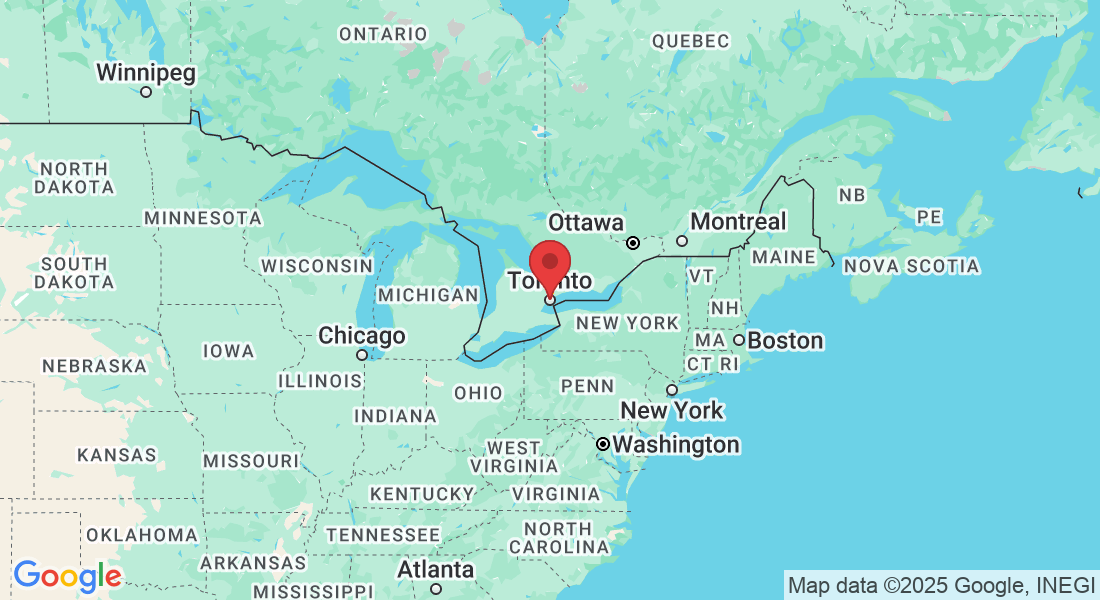
Office: Toronto, Ontario
Email: info@rewindmortgage.ca
Assistance Hours
Mon – Fri 9:00am – 6:00pm
Saturday – By Appointment Only
Sunday – CLOSED
Phone Number:
(289) 312-6333
Sit back, relax, and let us find the best product for you.
Discover the positive impact of reverse mortgages tailored for those who need financial support.
For information on alternatives to reverse mortgages visit www.brokerit.ca
© 2026 Rewind Reverse Mortgages. All Rights Reserved.
.
© 2026 Rewind Mortgage. All Rights Reserved. Rewind Mortgage is an information brand and registered division of 11082191 Canada Inc. o/a 'Broker It!', a fully licensed Canadian mortgage brokerage. Lic. Mortgage Brokerage: ON 13336 | NS 2023-3000791 | NB 240054445 | NL 25-08-PF067-1 | PEI 727141681 Adheres to the MBRCC Mortgage Broker Regulators' Council of Canada Code of Conduct. This is an information website. Rewind Mortgage is not itself a mortgage brokerage. For mortgage applications and advice you will speak with a Licensed Agent or Broker. Restrictions may apply. Subject to credit approval. By submitting your information you consent to us contacting you by text, email, or phone. For details on how we handle and protect your data, please see our Privacy Policy
.